

Most AI-generated work is not bad.
It is simply tasteless.
That distinction matters more than it sounds.
Taste is not about correctness. It is not about realism, resolution, or technical competence. AI is already very good at those things. What it struggles with is judgment. Knowing what matters. Knowing when something is finished. Knowing when to stop.
This is why so much AI imagery feels simultaneously impressive and hollow. It looks right, but it feels wrong. Not because it is artificial, but because it is indiscriminate.
Taste Is Not Style
One of the most common misunderstandings in creative work is the belief that taste and style are interchangeable.
They are not.
Style is surface. It can be mimicked, borrowed, recombined. Style is what AI excels at. Given enough reference material, it can reproduce the outward characteristics of almost anything. Lighting, composition, color palettes, aesthetics. None of that is particularly difficult anymore.
Taste is something else entirely.
Taste is the ability to choose. To edit. To decide that one option is better than another, even when both technically work. Taste is about restraint. About context. About intention.
Taste is not adding more. It is removing what does not belong.

Why AI Work Often Feels Overdone
AI systems are designed to generate, not to judge.
They do exactly what they are asked to do, often with extraordinary enthusiasm. More detail. More variation. More novelty. More visual noise. If something looks interesting, it is amplified. If something could be added, it usually is.
This creates a predictable outcome. Images that feel crowded. Scenes that feel overstated. Visuals that try to impress rather than communicate.
Human taste tends to move in the opposite direction.
Good editors cut. Good designers simplify. Good storytellers know when silence is more powerful than spectacle. These instincts are learned slowly and often unconsciously. They are shaped by experience, culture, and emotional literacy.
They are not easily encoded into prompts.
The Absence of Context
Taste does not exist in isolation. It is always contextual.
An image that works in one moment, culture, or medium may feel completely wrong in another. A campaign that feels bold in one category may feel absurd in another. Understanding this requires more than pattern recognition. It requires empathy.
AI does not feel embarrassment. It does not sense awkwardness. It does not intuit when something is trying too hard.
That awareness comes from being human.
This is why so much AI content struggles in environments that demand trust. Finance. Healthcare. Luxury. Education. Spaces where subtlety signals credibility and excess signals insecurity.
Taste is how trust is communicated visually.
Why This Matters for Marketing
Marketing is not a contest to see who can produce the most content or the most visually complex output. It is an exercise in connection.
People respond to work that feels considered. Work that respects their attention. Work that does not shout.
This is especially true in a landscape saturated with generated content. As AI becomes more common, the differentiator will not be who uses it best, but who uses it most thoughtfully.
Taste becomes the signal.
Learning to Use AI Quietly
At MDRNai, we are not interested in proving that AI was used. We are interested in understanding how these tools can support better judgment, not replace it.
Sometimes that means using AI extensively and hiding the result entirely. Other times it means discarding most of what is generated and keeping only what feels right.
Often, it means doing less than the technology allows.
Artificial intelligence is powerful. But power without taste is noise.
Taste is what turns capability into meaning.
The Work Is the Work
This is still something we are learning.
One of the temptations with new tools is the urge to explain ourselves. To justify the process. To make sure the audience understands how something was made and why it matters. That impulse is understandable, especially when the technology itself feels unfamiliar or controversial.
But over time, we have noticed something else.
When the work feels considered, when it feels restrained, when it carries a sense of intention, the questions about process tend to fall away. The focus shifts naturally to what is being communicated rather than how it came into existence.
The technology makes it easy to produce more. It does not make it easier to choose well.
What Restraint Looks Like
Restraint is often misunderstood as minimalism. That is not quite right.
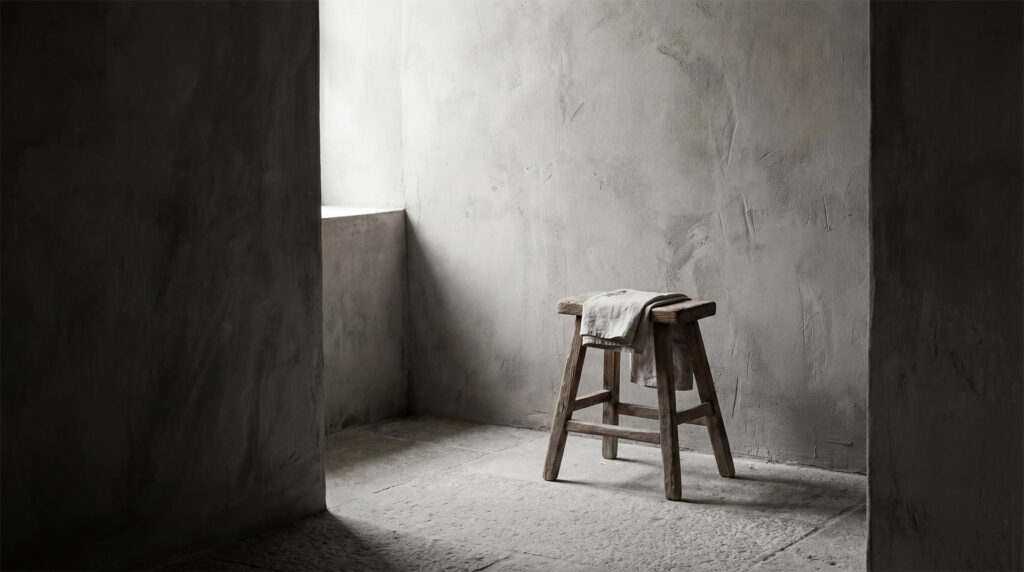
Restraint is not about doing less for the sake of doing less. It is about doing only what serves the story. It is knowing when the idea is strong enough to stand on its own.
In visual work, restraint shows up as:
Fewer elements
Softer contrast
Intentional framing
Space left unfilled
In writing, it shows up as:
Shorter sentences
Clear structure
Fewer claims
More confidence in the reader
AI can generate endlessly. Taste knows when to stop.